Taiji, Japan
Dolphin Hunts
There are currently twelve small dolphin hunting boats operating in Taiji, and each of these boats depart Taiji harbor at first light in search of wild dolphins. The boats fan out upon and beyond the horizon to cover a larger expanse of ocean, in order to effectively search well-known migratory routes.
Upon locating a pod, the dolphin hunters radio each of the other boats, giving them their location in order to start the ‘drive’ of the pod into the killing cove.
The boat that initially discovered the dolphins remains with the pod until other boats arrive. Once there are five or more boats on the scene, the hunters will initiate the drive.
The boats form a v-shaped wall around the family of dolphins. The dolphin hunters then utilize the long metal pole attached to the side of each boat, hammering the flanges on top to create a deafening “wall” of sound. The banging sound terrifies the dolphins, causing them to swim away from the sound, in the direction of the driving boats – driving them straight toward the Cove.
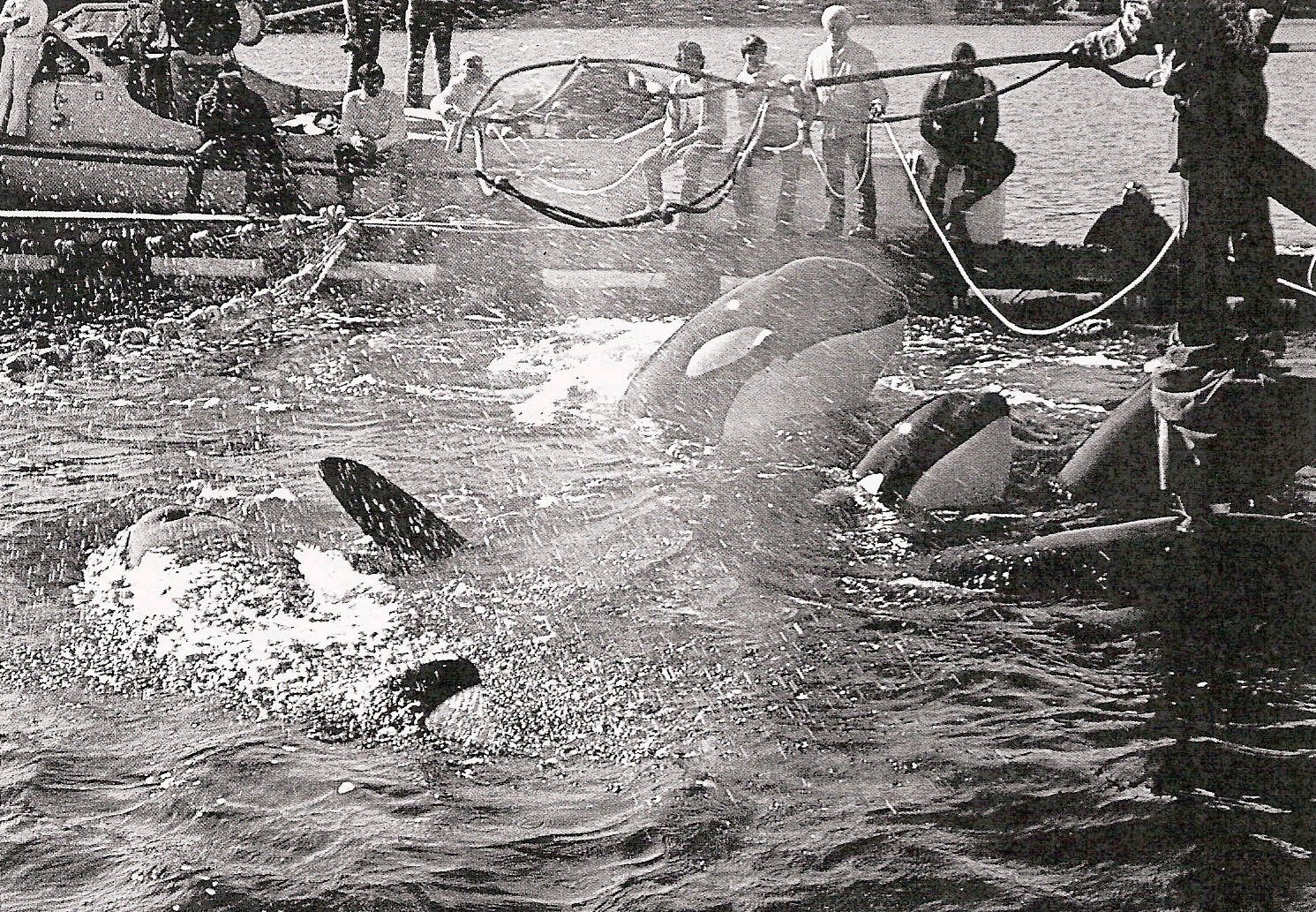
The hunters chase the dolphins toward Taiji Harbor until they have been forced into shallow waters, following the coastline into the Cove. Once successfully driven into the Cove, the dolphins are netted into the small shallow area. Hunters arrive in small hand motor-powered skiffs to work side-by-side with dolphin trainers to select dolphins for a life in captivity. The skiffs are also used to force the dolphins onto the rocky shore of the cove, segregate the family pods, and to transport the dead bodies of those slaughtered to the butcher house.

The Killing Process
Entire extended family units – pods – are caught this way. Elders, adults of reproducing age, pregnant females, juveniles and babies are all driven into the cove. Sometimes the pod will escape the boats, or some dolphins will get away as a pod is separated, successfully evading death or a life of imprisonment., However, more often than not, the entire family unit is driven into the killing cove – multiple generations wiped out in a single hunt.
Once the dolphins are netted within the cove, their fate is sealed. The captive selection and slaughter process commences.
Marine mammal trainers from the nearby Dolphin Base (swim-with-dolphin program), Hotel Dolphin Resort (live dolphin show) and from the Taiji Whale Museum (and live dolphin show) will often join the dolphin hunters in the shallow waters of the killing cove, selecting individuals – the “prettiest” and “juvenile” dolphins without scars or visible flaws - for the captive entertainment industry. Sometimes, the remaining dolphins will be released, but most often, they are all brutally slaughtered for human consumption. No compassion is shown, as grandparents, parents, pregnant females, and babies are all killed.
When the Academy Award-winning movie “The Cove” was filmed, the dolphins were killed by spear thrusts. This resulted in a massive amount of blood spilling into the water, turning the cove from a peaceful blue to blood red.
More recently, in an effort to reduce the amount of blood spilled into the water and into the sight of the world, the hunters use a killing technique known as “pithing.”
A metal rod is hammered into the spinal cord of the dolphins, causing paralysis.
The dolphins are still conscious, breathing and struggling as they watch their families slowly die. In the case of larger pods, a blood-filled cove is still seen and documented by the Cove Guardians. Simultaneously, the dolphin trainers are taking part in the live capture process; here we are shown the direct, bloody link between the mass dolphin killings and the captive industry.
The dolphins chosen for the entertainment industry are transported via skiff and sling either to captive sea pens in Taiji Harbor, or straight to Taiji Dolphin Base, Dolphin Resort Hotel or Taiji Whale Museum.
The dolphin hunters then tether the flukes of the remaining dolphins - sometimes several dolphins at once - in order to control and maneuver the dolphins. The panicked animals are then dragged onto the shallow and rocky shore or tethered to the cliff edge.
It has been documented that some dolphins and small whales have taken more than thirty minutes to die. The dolphins struggle in a pool of their own blood and the blood of their families, slowly suffocating and internally bleeding. On several occasions, Cove Guardians have documented dolphins still struggling as their bodies are tethered to skiffs and dragged to the butcher house. This method of killing is far from humane, despite claims from Taiji Fishermen’s Union and Japanese government officials.

The Captive Industry
Death is only the beginning of the suffering for dolphins captured in Taiji. Taiji, Japan is “ground zero” for the international slave trade of live dolphins.
The captive industry has become a billion-dollar worldwide trade, with all money made from the exploitation, imprisonment and lifelong suffering of these sentient beings. It is arguable that the dolphin drive hunts would not even take place if it weren’t for the amount of money made from the lucrative sales of live dolphins. The dolphin drive hunt itself as an operation is expensive. The dolphin hunters make approximately $32,000 USD for each live dolphin they capture. These figures can skyrocket from $32,000 USD up to $250,000 USD for a trained captive dolphin.
The captive dolphin entertainment industry and the dolphin drive hunt in Taiji are directly and inextricably linked. Buy a ticket to a marine park and you are supporting the slaughter of these innocent, sentient beings. Supporting a live dolphin show or participating in a confined swim-with-dolphin program anywhere in the world is the same as killing a dolphin in Taiji.
Sea Shepherd’s Cove Guardians have documented that it is the dolphin entertainment industry that drives the hunt. Well-intentioned marine mammal trainers and members of the dolphin show-viewing public all have the blood of innocent dolphins on their hands.
For the dolphins stolen from their families and sold into captivity, life is beyond unbearable. The dolphins born into a life of captivity exist in prison-like conditions and never know their own ocean.
It is now illegal in the United States to import a dolphin that has been caught in the wild; therefore the captive-bred dolphin business has exploded. One must wonder how many of the so-called captive bred dolphins imported into the US each year are actually wild-caught. Even the captive-bred dolphins most likely have close ancestors who were captured in Taiji.
The global aquarium industry’s link to the killing of dolphins and small whales in Taiji is undeniable and unavoidable. Taiji is the international hub for dolphin capture and slaughter.

What You Can Do
The slaughter of 20,000 dolphins, porpoises, and small whales occurs in Japan each year. Starting on September 1st and continuing through March of the next year, fishermen herd whole families of small cetaceans into shallow bays and mercilessly stab and drown them to death.
This annual slaughter of dolphins was virtually unknown until 2003 when Sea Shepherd globally released covertly obtained film and photographs of the now infamous bloody “Cove” in a village called Taiji. Beginning in 2010, and continuing to this day, Sea Shepherd has an ongoing presence of volunteers standing watch on site at the Cove. They are The Cove Guardians.
With your help, we will continue to pressure Japan to end this cruel and destructive slaughter of dolphins. We are passionate, dedicated, and committed - it may take time, but determination will win for the dolphins in Taiji.
We can all make a difference. If you would like your voices to be heard, please contact the respective representatives to tell them the massacre must stop!
Please help us end this slaughter. Your opinion is important – apathy allows this barbaric “tradition” to continue.